
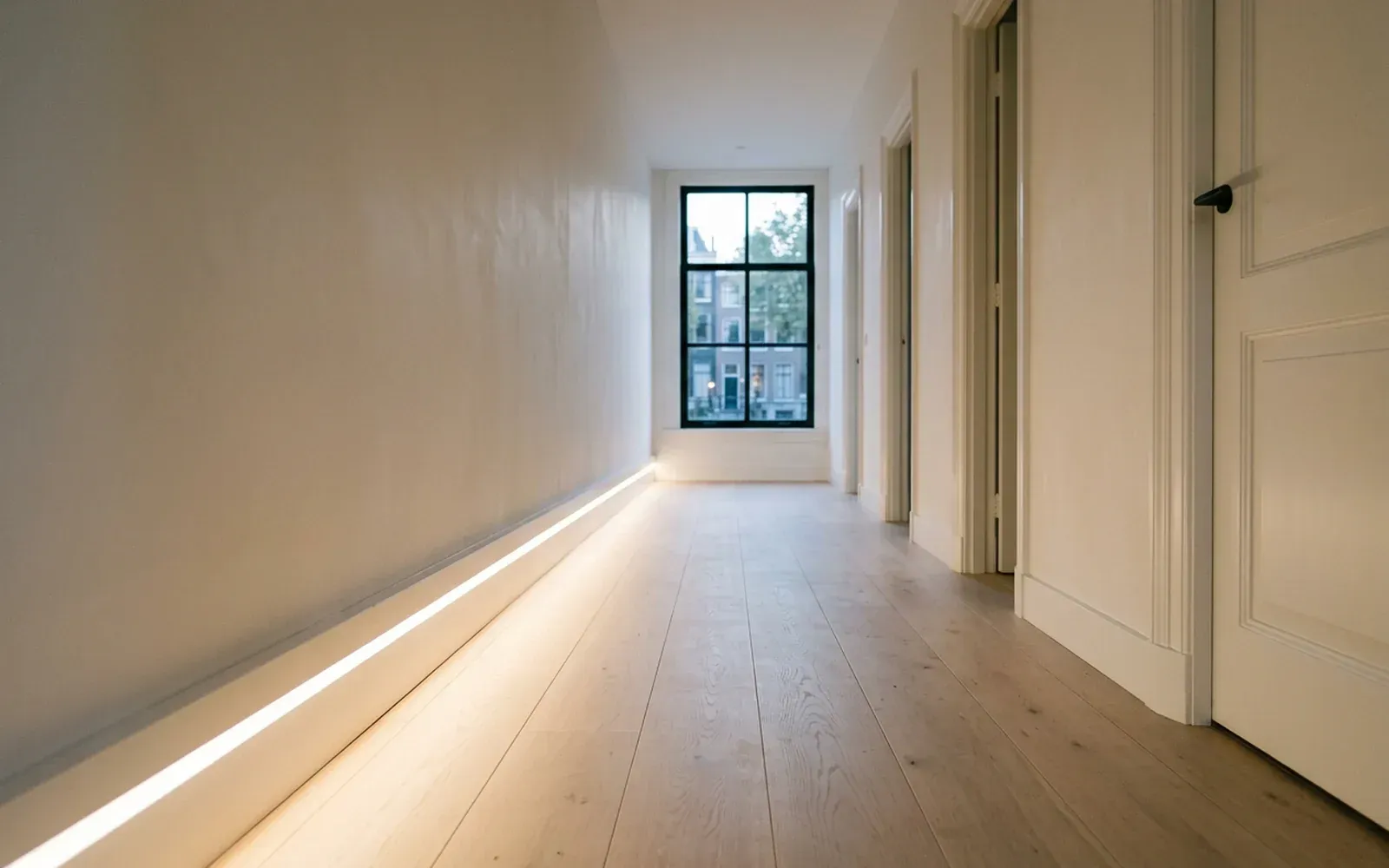
Skirting boards with LED lighting have a slot, channel or profile that holds an LED strip. The light shines down onto the floor or forwards through a diffuser, creating a soft line of light along the wall. That is handy as orientation light in the hallway, on the stairs or in the bedroom, and attractive as mood lighting in the living room. The most common option is an aluminium skirting board with an integrated LED channel; an MDF skirting board with a routed-in LED profile is also possible. Always have the electrical part, from driver to connection, done by a qualified electrician.
Why LED skirting?
Lighting low in a room has a different effect from a ceiling light:
- Orientation light: at night you can see where you are walking without switching on bright lights.
- Atmosphere: a line of light along the floor adds depth and makes a room appear to float.
- Accent: along a TV wall, a panelled wall or in an alcove, skirting lighting highlights a feature.
- Safety: on stairs and landings, light at floor level helps you see the treads and edges.
What options are there?
Aluminium skirting with an LED channel
Aluminium skirting is often supplied as a system with a channel for an LED strip and a diffuser cover. The light shines down or forwards. Aluminium dissipates the heat from the LEDs well and suits sleek, modern interiors. You can read more about this material in aluminium skirting boards.
MDF skirting with a routed LED profile
An MDF skirting board can be given a slot on the underside or the front to take an aluminium LED profile. That way you keep lacquered skirting in the colour of your choice, with lighting built in. This calls for precise routing and a skirting board that is thick or tall enough for the profile. A tall skirting board often gives more room for this.
Floating skirting or shadow gap with light
With shadow gap skirting or skirting that appears to float just above the floor, an LED strip can be built into the shadow gap. That gives the most minimalist effect. See also modern skirting boards and trends.
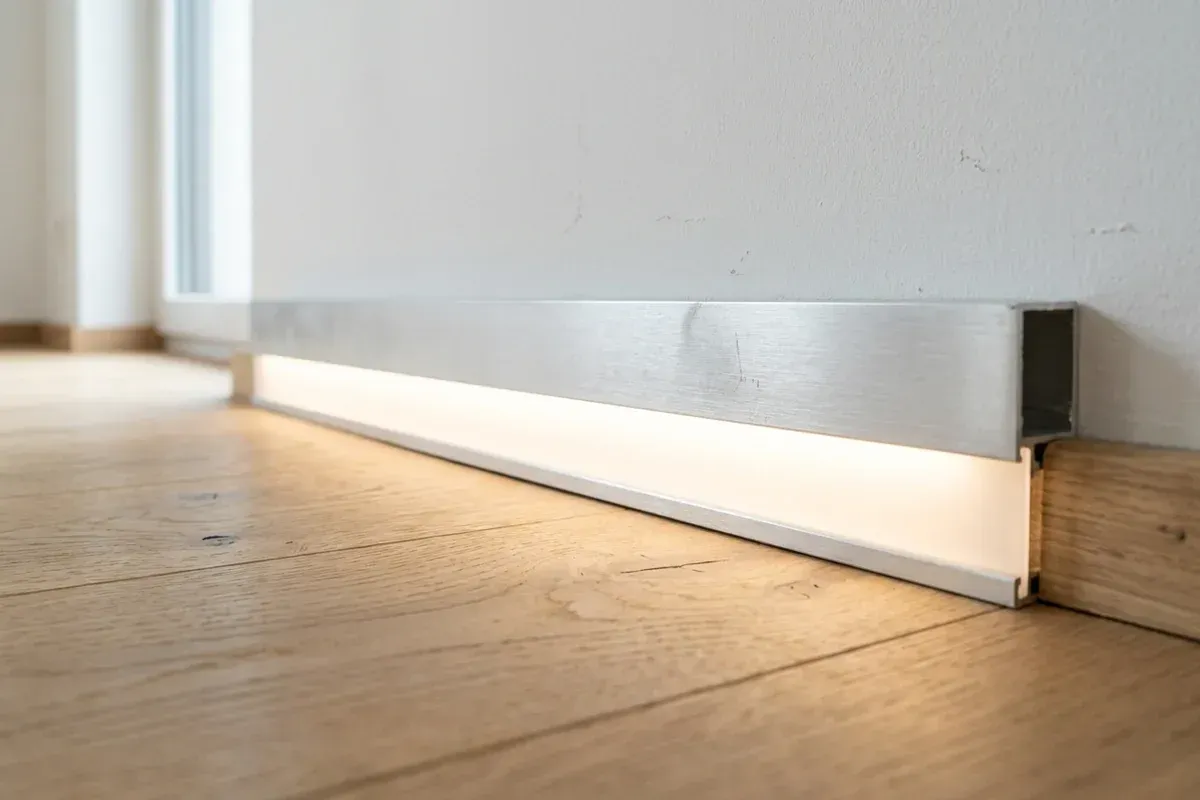
Light downwards or forwards?
| Direction | Effect | Point to watch |
|---|---|---|
| Down onto the floor | Soft pool of light along the wall | Shows the floor and any unevenness |
| Forwards through a diffuser | Line of light in the skirting itself | The diffuser must light evenly, without hotspots |
| In a shadow gap | Indirect, floating effect | Needs a straight, flat wall and floor |
What to arrange with your electrician in advance
Skirting lighting is a joint effort between skirting installation and electrics. Agree these points in advance with a qualified electrician:
- Power supply: an LED strip runs on low voltage and needs a driver. Where will it go, and will it stay accessible?
- Cabling: how does the cable run from the driver to the skirting, and where does it enter the skirting?
- Switching: a switch, a motion sensor or a dimmer? Motion sensors are popular in hallways and on stairs.
- Lengths: over long runs, the strip sometimes has to be fed in sections to give even light.
- Colour temperature: warm white usually feels most comfortable in homes.
Mains cabling does not simply belong behind a skirting board. If you also want to hide other cables, skirting boards with a cable channel explains which cables are suitable. A cable channel skirting is intended for low-voltage cables.
What to look for during installation
A flat floor
Light grazing across the floor shows every irregularity: height differences, joints and even dust. A flat floor and an even gap between skirting and floor are therefore important.
Corners
An LED strip does not simply run around a corner. At internal and external corners the profile has to continue or join neatly, without a dark spot. The mitre of the skirting also has to suit the profile.
Accessibility
LEDs and drivers last a long time, but not forever. Choose a build-up in which the strip can be replaced without tearing out the skirting, for example via a removable cover.
Doorways
A doorway interrupts the skirting and therefore the line of light as well. Decide in advance where the line of light starts and ends, and how the cable continues across a break.
Combining with other lighting
Skirting lighting works well together with indirect lighting higher up in the room. In coving with indirect lighting you can read how a lighting cornice on the ceiling works.
Common mistakes
- Involving the electrician too late, so there is no cable or driver in the right place.
- No accessible driver, so replacing it later means demolition work.
- A light colour that is too cool, which quickly looks cold in a home.
- Light across an uneven floor, so that every joint and height difference stands out.
- A line of light that stops halfway without a logical start or end point.
A test piece with a temporarily connected strip shows in advance how the light falls and which colour suits best.
Skirting lighting in a new build or renovation
In new builds and larger renovations, skirting lighting is easiest to include: cables and drivers can be prepared in the wall or floor before plastering and finishing. In an existing home it is also possible, but the cable route needs more coordination. The sooner skirting installation and electrics are coordinated, the cleaner the result.
Where does skirting lighting work best?
- Hallway and landing: orientation light at night, often with a motion sensor.
- Along the stairs: light at floor level, see also staircase skirting boards.
- Bedroom: soft light beside the bed, without lighting the whole room.
- Living room: as an accent along a TV wall or panelled wall.
- Hotels and commercial spaces: in corridors and lobbies as mood and orientation light.
Having LED skirting boards fitted?
TipTop Plinten fits skirting boards in aluminium, MDF and solid wood, and coordinates the space for LED profiles and cables with your electrician. To see what sleek, modern skirting looks like, take a look at the matt black skirting boards in Leerdam. Send photos of the room via the contact page and tell us where you want the light. The quote is free and without obligation. An on-site measurement is optional for €75 incl. VAT; this amount is credited as a discount on jobs above a minimum project size. We are happy to communicate in English, as well as Dutch, German, Turkish, Persian and Arabic.
Frequently asked questions
A skirting board with a slot, channel or profile that holds an LED strip. The light usually shines down onto the floor or forwards through an opal diffuser. This creates a soft line of light along the wall, without visible light points.
The electrical part, such as the driver, wiring, switching and connection to the mains, is a job for a qualified electrician. TipTop Plinten fits the skirting boards and agrees the space for the LED profile and cables with the electrician in advance.
Aluminium skirting with an integrated LED channel is the most common option. An MDF skirting board can also be given a routed slot with an aluminium LED profile inside. It is important that the LED strip stays accessible for replacement.
In the hallway, on the landing, along the stairs and in the bedroom, where soft orientation light is handy at night. In a living room it is mainly used as mood lighting, for example along a TV wall or a panelled wall.
Yes. Light that grazes across the floor makes height differences, joints and dust more visible. A flat, clean floor and an even gap between skirting and floor make the difference.
Related articles
Choosing skirting
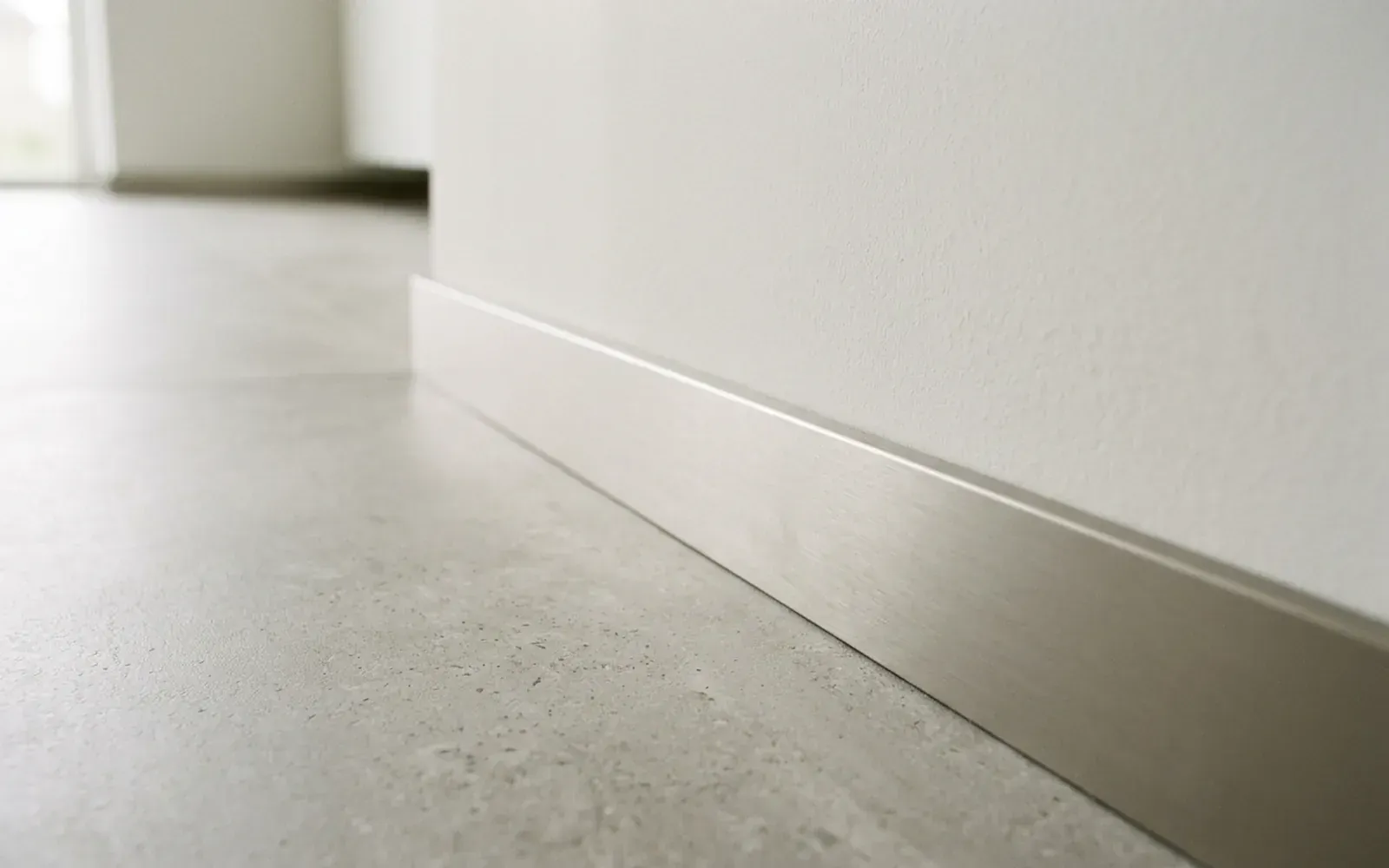
Aluminium skirting boards: sleek, modern and when they fit
Aluminium skirting boards suit sleek, modern interiors and commercial spaces. Here is how to choose between surface-mounted and recessed, and what it asks of your walls.
Choosing skirting
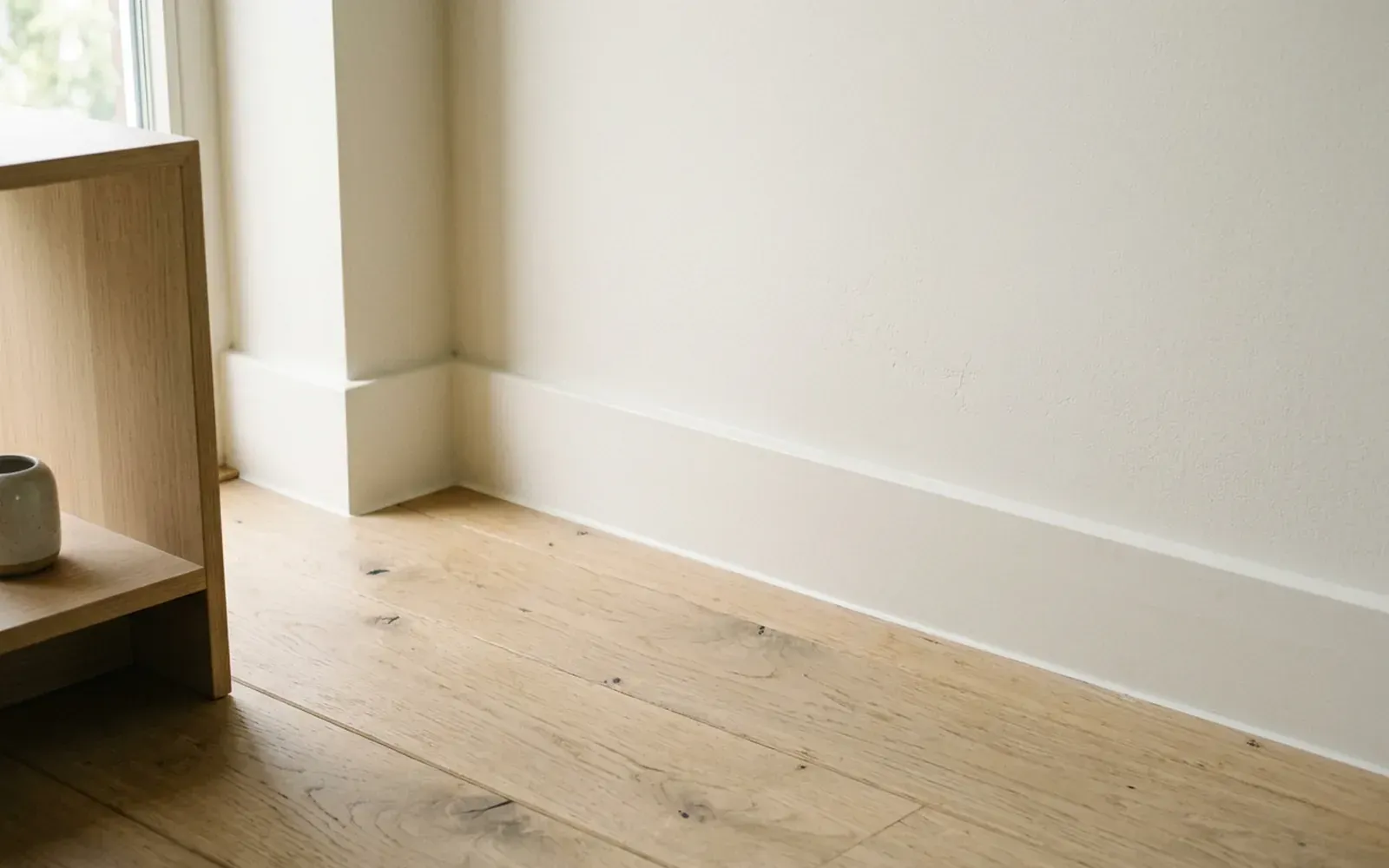
Modern skirting boards: the styles that suit a sleek interior today
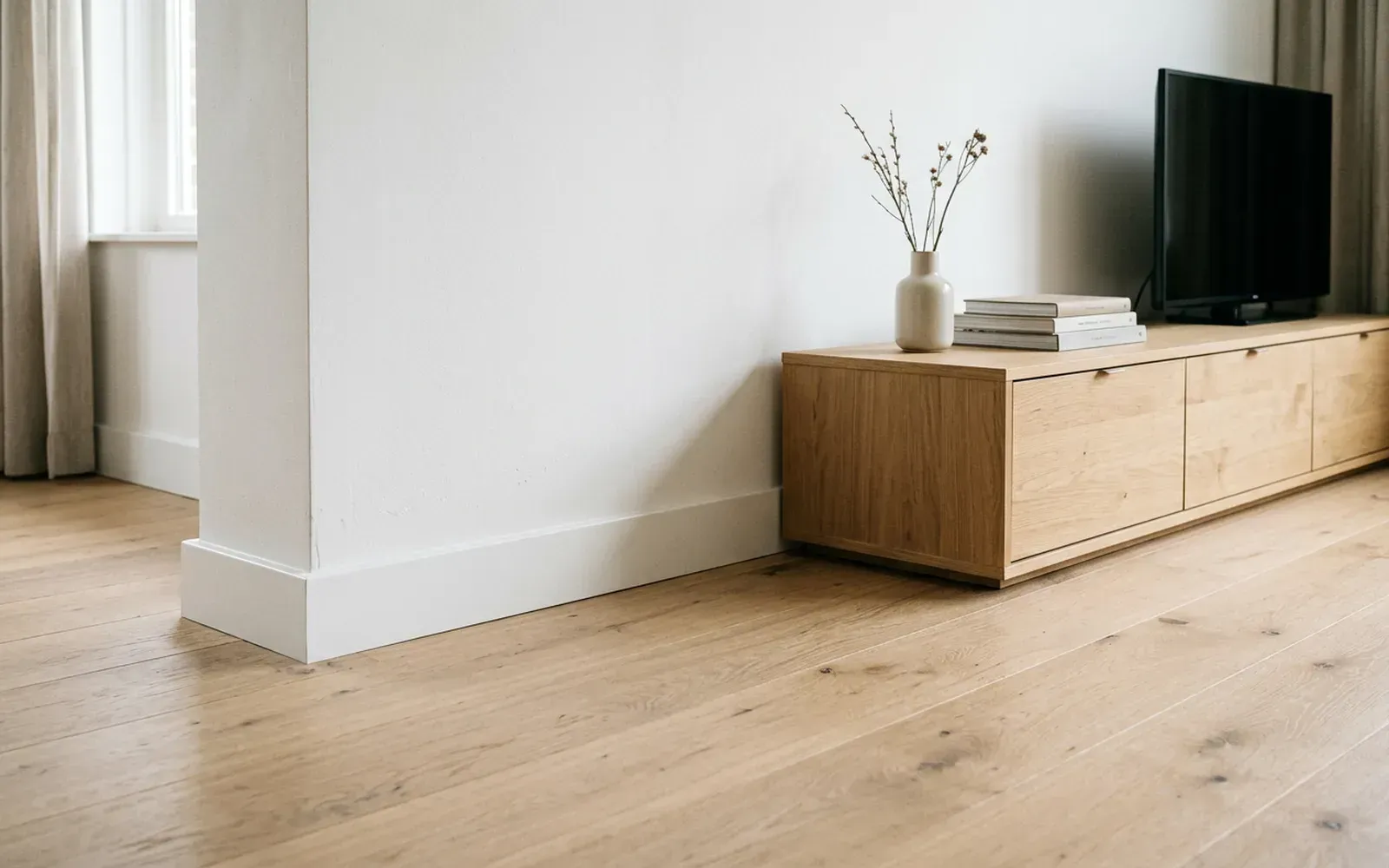
Modern skirting boards are all about calm and clean lines. From shadow gap skirting to tall skirting in the wall colour or an aluminium profile: these are the styles that suit a contemporary interior.
Choosing skirting
Skirting boards with a cable channel: hiding cables neatly
Want network, TV and speaker cables out of sight along the wall? A skirting board with a cable channel can do that. Here are the types, the possibilities and the limits.
Mouldings & walls
Coving with indirect lighting: how a lighting cove works
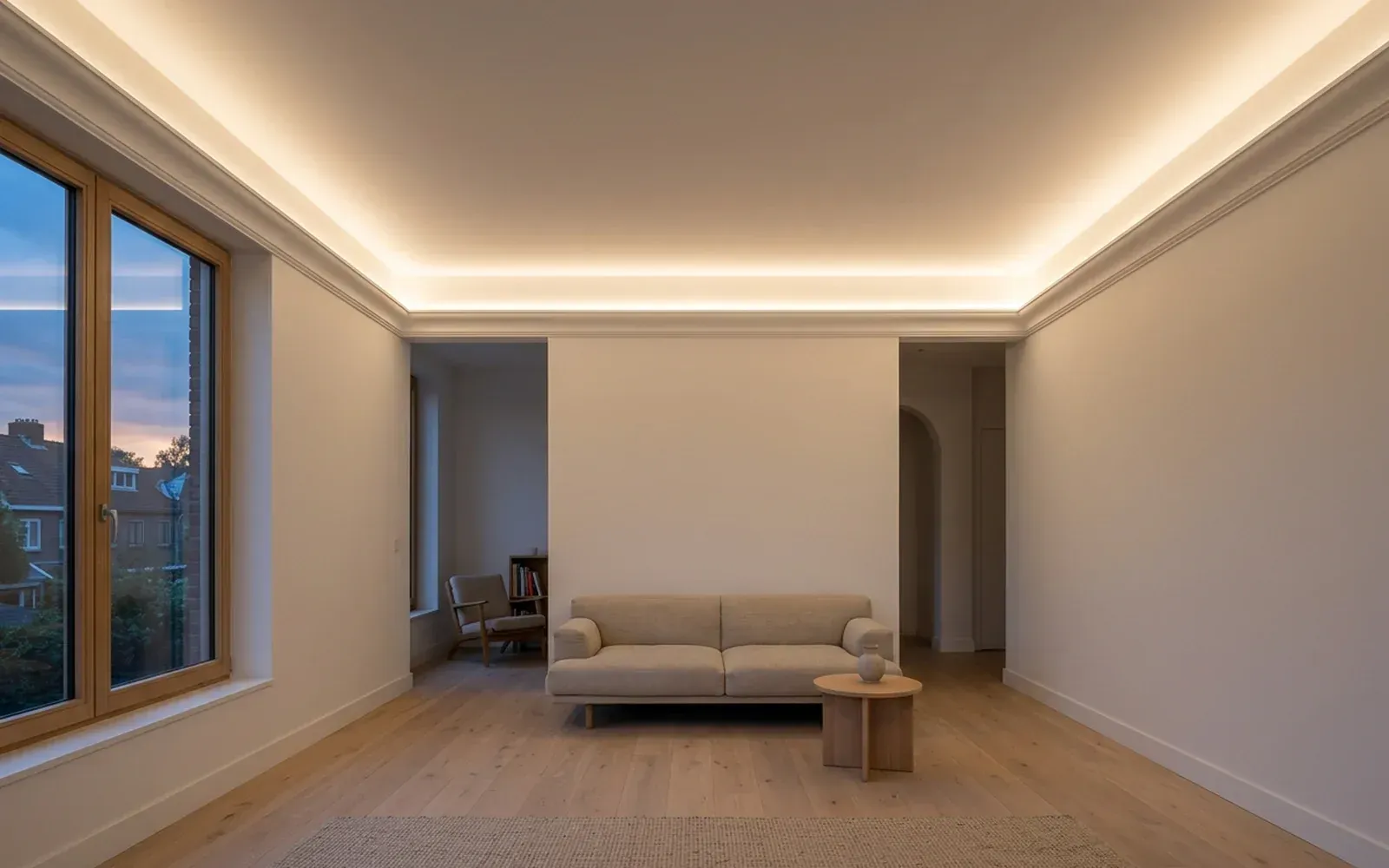
Coving with an LED strip lets light wash softly across the ceiling. We explain how a lighting cove works, which versions there are and what to arrange beforehand.
Related
Aluminium skirting
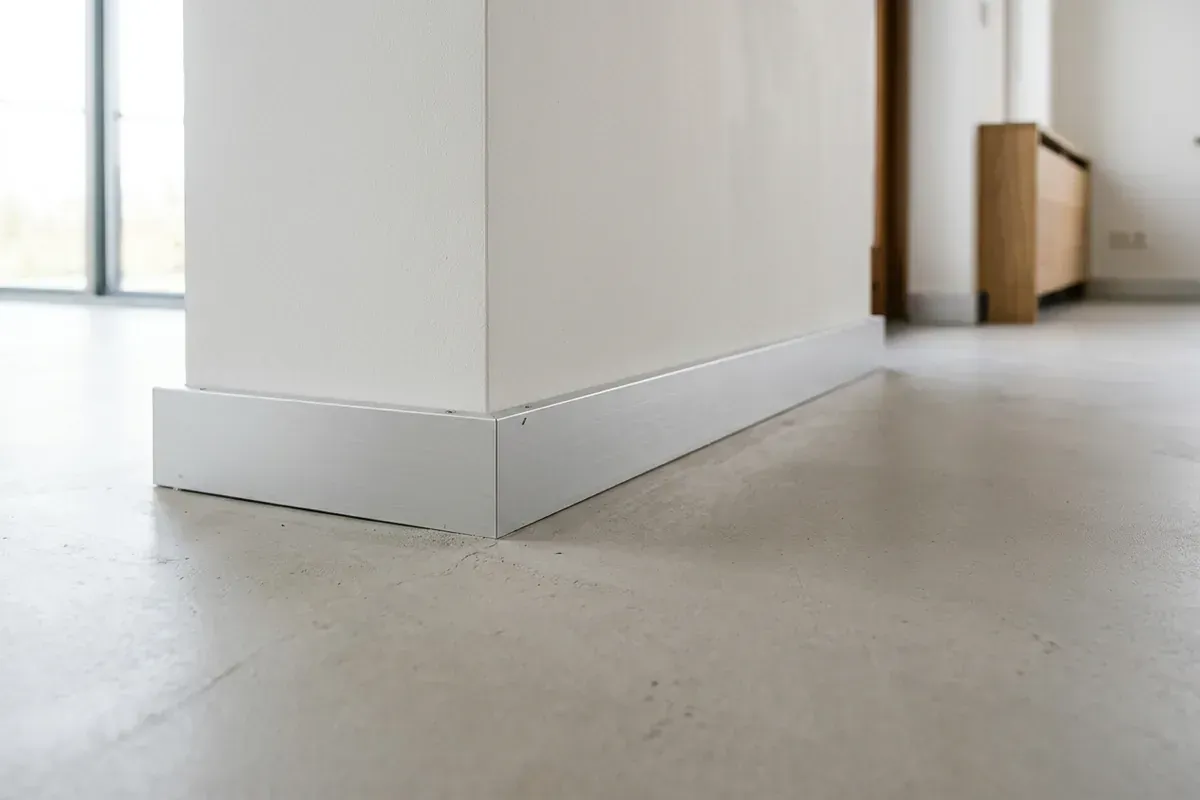
Aluminium skirting is a slim metal profile at the base of the wall. It suits sleek, modern interiors and can be combined with LED lighting.
Shadow gap skirting
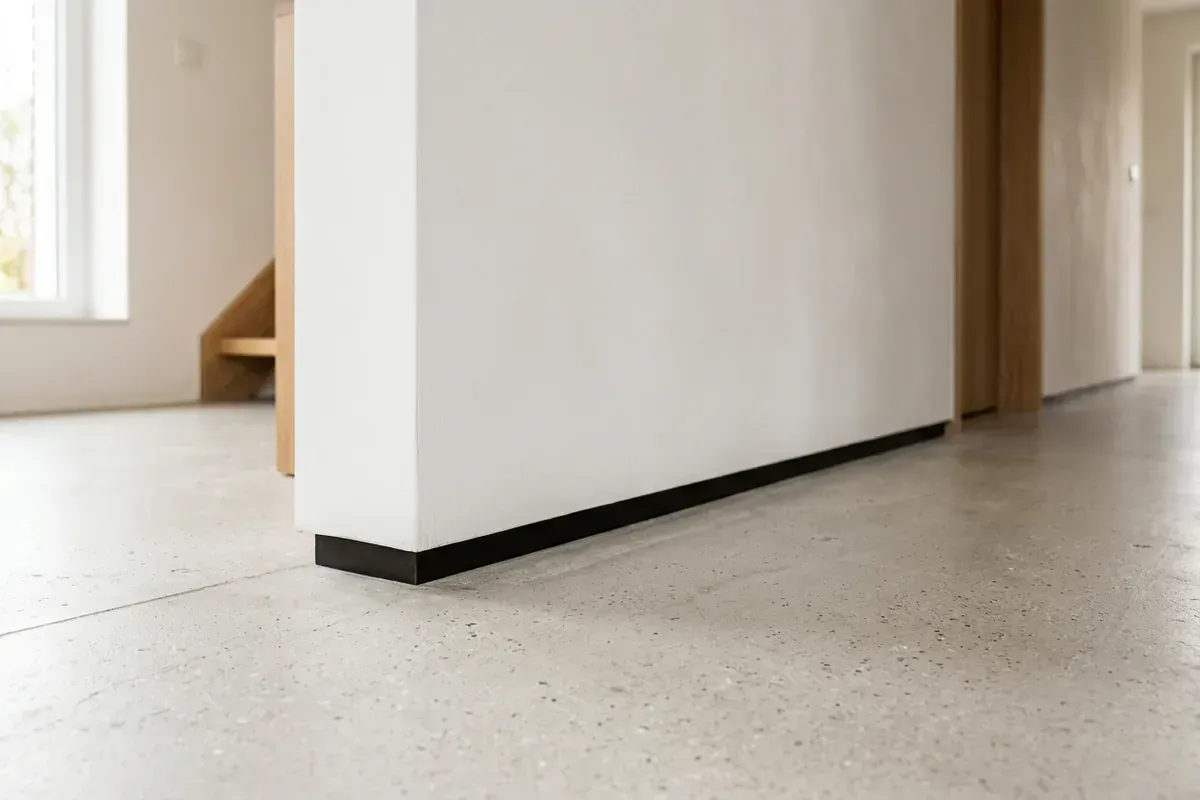
Shadow gap skirting sits flush with or behind the wall, with a narrow shadow line above it. The result is a minimalist wall that seems almost to float.
Cable skirting
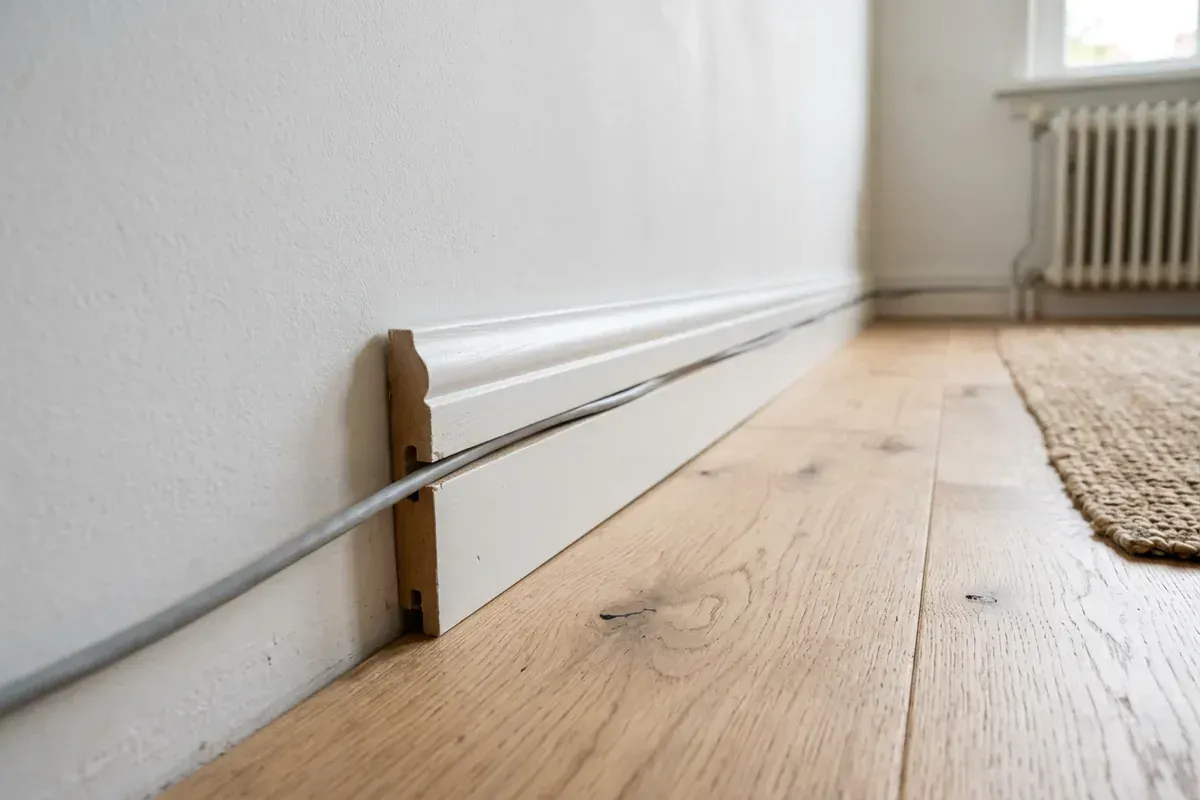
Cable skirting has space for cables at the back. That way, leads for the TV, internet or speakers disappear neatly out of sight.
MDF
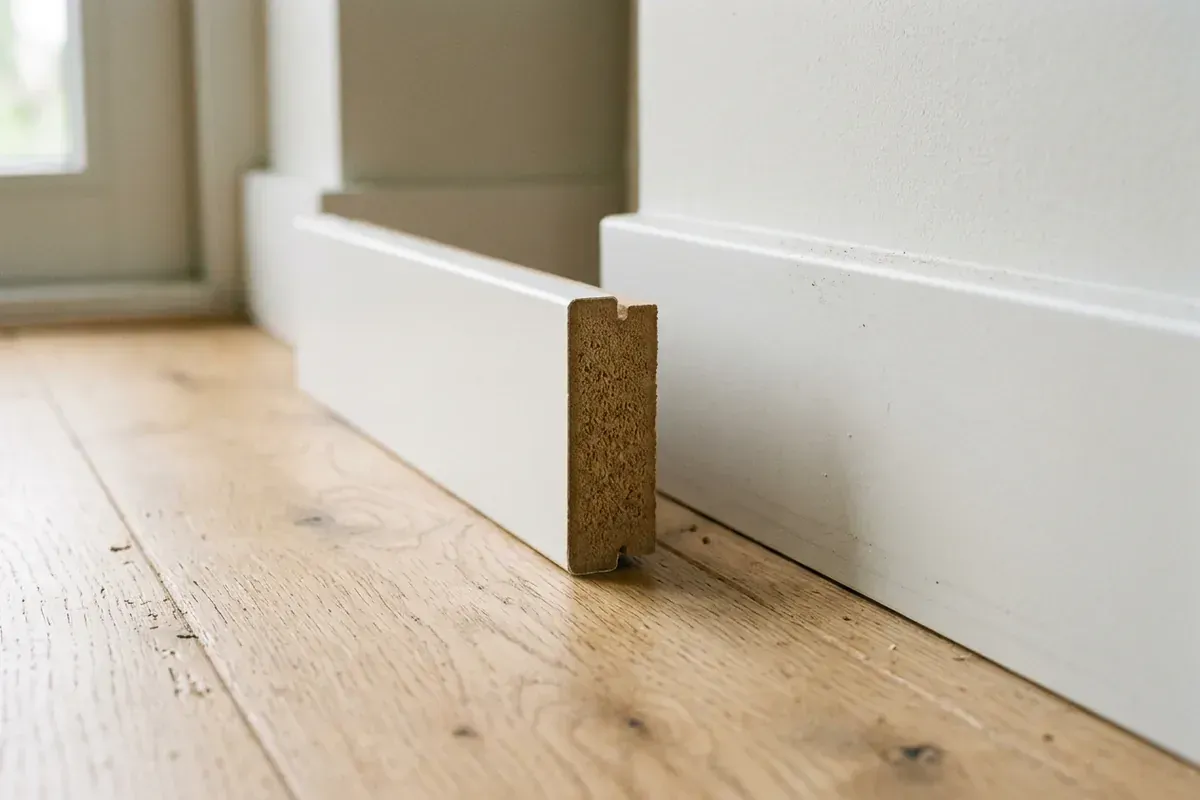
MDF is a sheet material made of pressed wood fibres. It is stable, smooth and easy to paint, which makes it the most popular material for skirting boards.
Tall skirting
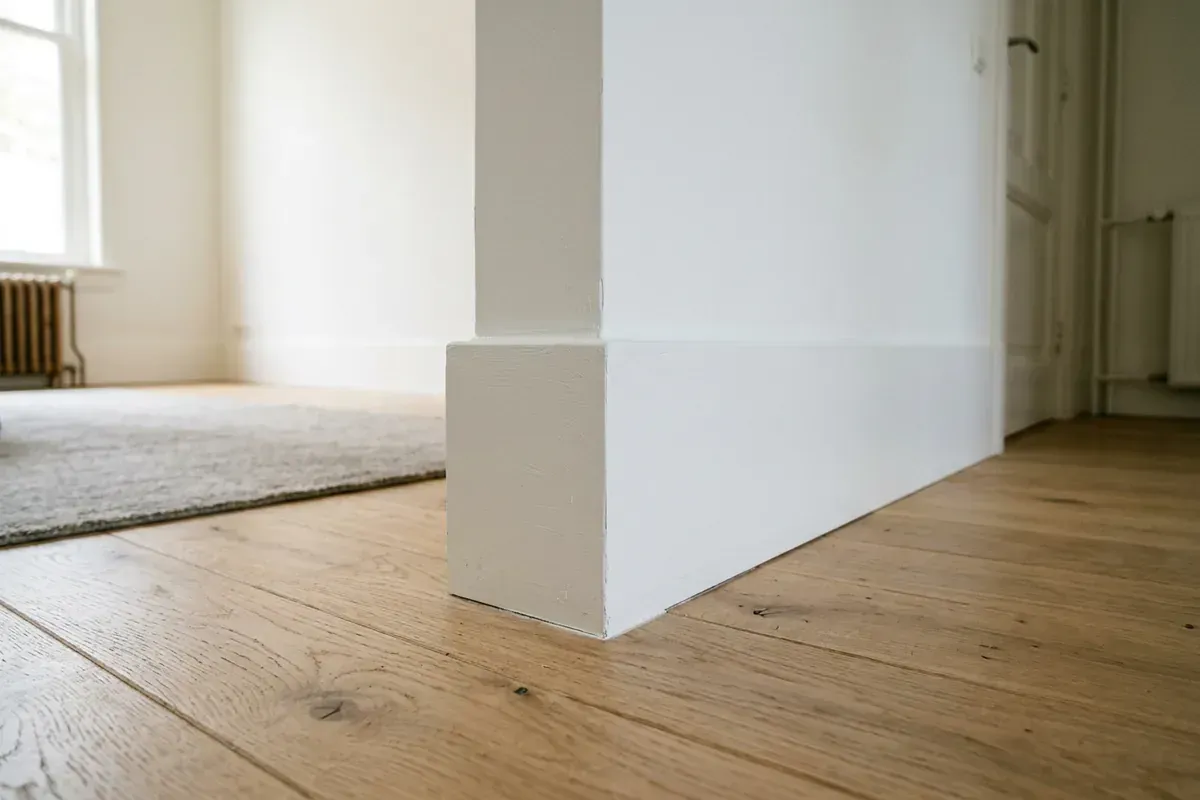
Tall skirting is usually 12 cm or higher. It gives a room calm and elegance, provided the height suits the ceiling and the interior.
Skirting board installation by a specialist skirting fitter
TipTop Plinten fits skirting boards in MDF, solid wood and aluminium, finished in any RAL colour and neatly matched to any floor, even with uneven walls.
Skirting board installation? Request a free quote
On-site measurement €75 incl. VAT (credited for orders above a minimum project size)